

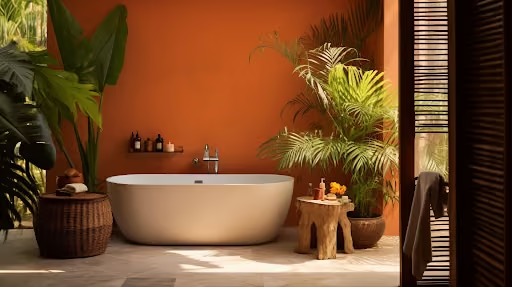
A bathroom renovation is an opportunity to reduce everyday water and energy use without compromising comfort or style.
Choosing water-efficient showers, taps, and toilets can help limit water consumption, while reducing hot-water use can also lower the energy needed for heating. Efficient lighting can further reduce electricity use.
These improvements are easiest to plan during a renovation, when fixtures, lighting and the bathroom layout are already being considered.
A bathroom renovation specialist can help assess efficiency alongside the layout, fixture selection and installation requirements from the beginning.
What Makes a Bathroom More Eco-Friendly?
A more sustainable bathroom uses water and energy efficiently while remaining practical for everyday use.
This can involve choosing water-efficient showers, taps and toilets, reducing unnecessary hot-water use and selecting efficient lighting.
Durability and maintenance also matter because bathroom products need to withstand regular moisture, cleaning and daily use.
The Australian Government’s Water Efficiency Labelling and Standards (WELS) scheme provides a recognised way to compare the water efficiency of regulated products.
Its rating label uses a zero-to-six-star scale, with more stars indicating greater water efficiency. Regulated products include showers, taps, flow controllers and toilets.
When planning a Home Makeover Perth, these efficiency considerations can be assessed alongside the bathroom’s layout, fixtures and overall design.
Which Bathroom Upgrades Can Reduce Water Consumption?
Choosing efficient fixtures can help reduce water use during everyday bathroom routines.
Water-efficient fixtures can reduce the amount of water used during everyday bathroom activities. Useful options include:
- WELS-rated showerheads: WELS ratings allow homeowners to compare shower efficiency before selecting a product. WA Government guidance also identifies showers as an important opportunity for reducing household water use.
- Efficient taps: WELS ratings make it easier to compare the water efficiency of regulated taps.
- Efficient toilets: Toilets covered by WELS can be compared according to their water-efficiency ratings.
- Flow controllers: These are also covered by WELS and can be considered when planning efficient bathroom fittings.
- Leak prevention: Checking existing taps, toilets and plumbing for leaks can help prevent avoidable water loss.
When planning a small bathroom renovation, homeowners can work with small bathroom renovation contractors to incorporate efficient fittings without compromising the available space.
How Can Bathroom Upgrades Reduce Energy Consumption?
Water and energy use are closely connected when the water being used needs to be heated. Using less hot water means less water needs to be heated, which can reduce the energy required for water heating.
The Australian Government states that water heating is the second-largest segment of household energy use, ranging from 15% to 27% depending on location.
This makes efficient showering and tap use relevant to both water and energy consumption. During a renovation, homeowners can therefore consider:
- Water-efficient shower and tap fittings.
- Reducing unnecessary hot-water use.
- LED bathroom lighting.
- Lighting controls where suitable.
- Natural light where the existing design allows.
Which Upgrades Can Help Reduce Long-Term Costs?
The financial effect of an efficient bathroom depends on existing fixtures, household usage and local utility costs. There is therefore no single saving that applies to every renovation.
A water-efficient fixture can reduce water use. If that water would otherwise have been heated, using less hot water can also reduce the energy required for heating. Efficient lighting can reduce the electricity used for illumination.
This makes product performance more useful than price alone when comparing renovation options. Homeowners should consider how each fixture is expected to perform and how often it will be used.
Which Materials Suit a Sustainable Bathroom Renovation?
Material selection should focus on durability and suitability for the bathroom rather than relying on environmental marketing claims.
Bathrooms experience regular moisture, cleaning and daily use, so each material should be suitable for a wet-area application and able to withstand the conditions it will face.
It is also worth considering maintenance requirements before making a final choice. A finish that is easy to clean and maintain can support better long-term performance and keep the bathroom practical over time. Consider:
- Is the material suitable for wet areas?
- How well will it withstand regular use?
- How easily can it be cleaned and maintained?
- Does the finish suit the bathroom’s requirements?
- Is the product likely to need frequent replacement?
A sustainable approach does not require every product to carry an “eco-friendly” label. Considering how well a product performs over its expected service life can be a more useful starting point.
What Should You Avoid When Planning an Eco-Friendly Bathroom?
A sustainability-focused renovation can become less effective when efficiency is considered separately from the rest of the bathroom. Avoid:
- Choosing products without checking efficiency ratings: WELS provides recognised information for comparing regulated water-using products.
- Replacing efficient fittings unnecessarily: If an existing product is suitable and already performs efficiently, replacing it may provide limited benefit.
- Focusing only on appearance: A stylish fitting still needs to suit the bathroom and perform effectively.
- Ignoring leaks: Efficient fixtures cannot prevent water loss caused by leaking plumbing.
- Assuming expensive means sustainable: Price alone does not determine water efficiency, energy performance or durability.
- Treating fixtures separately: Lighting, plumbing, fittings and layout should work together as one renovation plan.
How Can Small Bathrooms Be Designed More Efficiently?
A small bathroom can still incorporate water- and energy-efficient features. The key is to plan the available space carefully and avoid unnecessary fixtures.
Compact fittings, efficient lighting and practical storage can help make better use of the available area. The layout should also remain easy to use, clean and maintainable.
Principal Renovations states that it specialises in small bathroom renovations in Perth, creating layouts that maximise space, functionality and style. Its bathroom renovation process includes consultation, design, material selection and construction.
This allows homeowners to consider efficiency while the layout and product selections are still being developed.
How Can Principal Renovations Help With an Efficient Bathroom?
Water and energy considerations need to work with the property’s existing plumbing, available space and preferred bathroom layout.
Principal Renovations describes its bathroom renovation process as covering consultation, design, material selection and construction.
For homeowners comparing Perth bathroom renovation specialists, discussing water and energy priorities during the planning stage can help ensure efficiency is considered alongside the bathroom’s practical requirements.
Closing Thoughts
Eco-friendly bathroom upgrades can reduce resource use through efficient water fixtures, lower hot-water demand and more efficient lighting.
The most effective approach is to consider these choices during the renovation planning stage, when layout, plumbing, fixtures and finishes can be assessed together.
If you are planning a bathroom renovation in Perth, Principal Renovations can coordinate the key stages of the project around your functional requirements. Its complete bathroom renovation services cover consultation, design, material selection and construction.
FAQ
What Features Should Be Included in a Sustainable Bathroom Design?
Consider WELS-rated showers, taps and toilets, efficient lighting and durable materials suited to the bathroom’s conditions. The right combination depends on the space, household needs and renovation scope.
How Can a Water-Efficient Bathroom Help Reduce Household Water Consumption?
Efficient showers, taps and toilets can reduce the water used during everyday bathroom activities. WELS ratings provide a consistent way to compare regulated products before purchase.
Which Eco-Friendly Bathroom Upgrades Deliver the Greatest Long-Term Savings?
There is no single upgrade that provides the same savings for every household. Water-efficient fixtures, lower hot-water use, and efficient lighting can all contribute, depending on existing products and household usage.
How Does an Energy-Efficient Bathroom Reduce Electricity Costs?
Using less hot water can reduce the energy required to heat it, while efficient lighting can reduce the electricity used for illumination.
What Should Homeowners Consider When Planning a Sustainable Bathroom Renovation?
Consider water efficiency, energy use, fixture performance, lighting, material suitability, layout, and the condition of existing products. Reviewing these factors together can produce a more practical renovation.
