

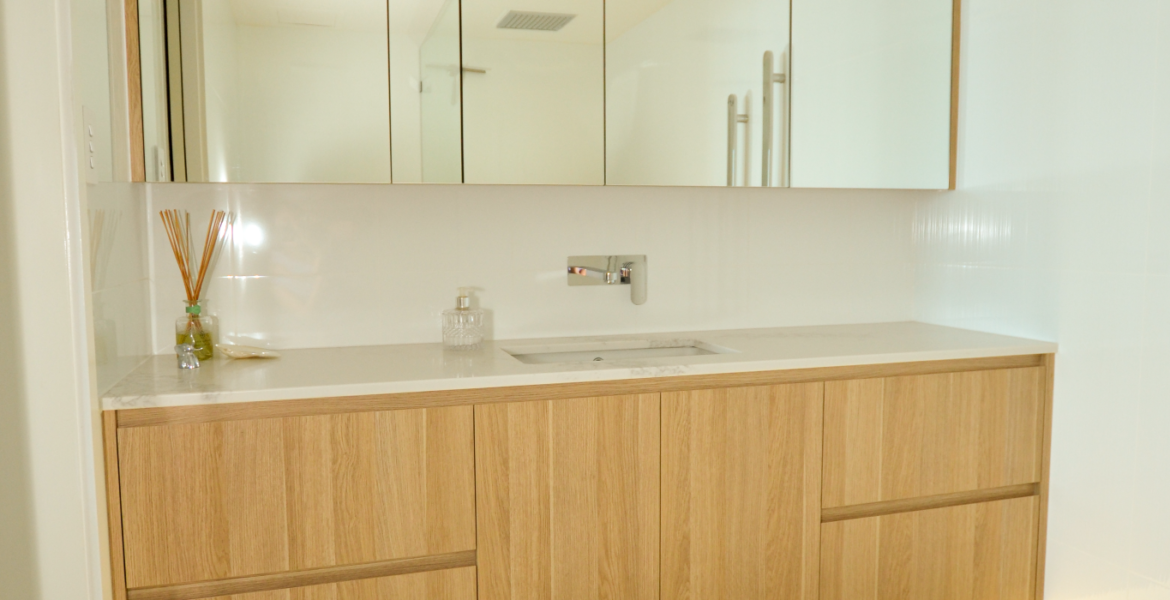
Small bathrooms can often feel cramped, cluttered, and difficult to use efficiently. However, with the right layout decisions and smart design choices, even compact bathrooms can feel more open, functional, and comfortable for everyday living.
Modern bathroom renovations are no longer only about appearance. Homeowners now want bathrooms that improve:
- storage
- comfort
- practicality
- movement
- long-term usability
That is why understanding practical small bathroom design tips is important before starting a renovation project. The right design decisions can completely transform how a small bathroom feels without increasing the room size itself.
Whether you are updating an ensuite, apartment bathroom, or renovating as part of a broader luxury home renovation, thoughtful planning can help compact bathrooms feel calmer, brighter, and easier to use every day.
Why Is Smart Design So Important in Small Bathrooms?
In smaller bathrooms, every design decision has a bigger impact on:
- movement
- lighting
- storage
- usability
- visual openness
Poor layouts can quickly make compact bathrooms feel:
- crowded
- darker
- harder to clean
- visually overwhelming
Smart bathroom design focuses on improving how the space functions rather than simply adding more features.
This is particularly important in many older Perth homes and apartments where bathrooms were originally designed with limited storage and tighter layouts.
Which Small Bathroom Design Tips Make the Biggest Difference?
The most effective small bathroom design tips are usually the ones that improve both functionality and visual openness at the same time.
Some of the most impactful upgrades include:
- floating vanities
- frameless shower screens
- recessed storage niches
- large-format tiles
- wall-hung cabinetry
Floating vanities expose more floor space, helping bathrooms feel less enclosed while also improving cleaning access.
Large-format tiles are also commonly used because they reduce grout lines and create a cleaner, less cluttered appearance.
Frameless shower screens allow light to move more freely throughout the room, helping smaller bathrooms feel brighter and more spacious.
Which Small Bathroom Space Saving Ideas Actually Work?
Not all bathroom trends work well in compact spaces. The best small bathroom space-saving ideas focus on improving functionality without overcrowding the room.
Some of the most practical space-saving solutions include:
- recessed shower niches
- mirrored storage cabinets
- wall-mounted tapware
- sliding shower screens
- vertical shelving
Wall-mounted fixtures free up visible floor area, helping bathrooms feel more open visually.
Recessed niches also provide practical storage without bulky shelves interrupting movement within the room.
In compact en-suites and apartment bathrooms, combining storage and functionality into fewer design elements usually creates a cleaner and more practical layout.
How Can You Improve Layout and Flow in a Small Bathroom?
Layout is one of the biggest factors influencing how spacious a bathroom feels.
When planning tips for small bathroom design, improving movement flow is often more important than adding extra fixtures or decorative elements.
Good layouts usually focus on:
- reducing visual obstacles.
- maximizing available light.
- positioning fixtures efficiently.
- maintaining clear sightlines.
For example:
- Placing larger fixtures against walls improves circulation.
- Wall-hung vanities increase visible floor space.
- Open layouts help bathrooms feel less confined.
Even smaller layout adjustments can significantly improve day-to-day comfort and usability.
Which Fixtures and Storage Solutions Work Best in Small Bathrooms?
Compact bathrooms require fixtures that improve usability without overwhelming the available space.
Some of the most effective small bathroom fixtures include:
- wall-hung vanities
- compact basins
- frameless shower screens
- recessed mirrored cabinets
- back-to-wall toilets
Storage should also feel integrated rather than bulky.
Well-designed storage solutions help reduce:
- countertop clutter
- overcrowding
- cleaning difficulties
- visual heaviness
The most successful small bathrooms balance practicality, storage, and visual openness together.
Which Colours, Lighting, and Mirrors Help Small Bathrooms Look Bigger?
Visual design choices strongly influence how spacious a bathroom feels.
Lighter colour palettes are commonly used because they reflect more light and help create a more open appearance.
Popular bathroom colour choices include:
- soft whites
- warm neutrals
- light greys
- natural stone tones
Lighting is equally important in smaller bathrooms.
Layered lighting using:
- mirror lighting
- ambient lighting
- ceiling lighting
can help reduce shadows and improve brightness throughout the room.
Mirrors also help visually expand compact bathrooms by reflecting both light and surrounding space.
What Small Bathroom Design Mistakes Should Be Avoided?
One of the most common mistakes in compact bathrooms is trying to include too many features within a limited space.
This often leads to:
- overcrowded layouts
- reduced functionality
- poor movement flow
- visual clutter
Other common mistakes include:
- oversized vanities
- dark colour schemes
- bulky storage units
- poor lighting placement
The most successful small bathrooms usually feel simple, cohesive, and practical for everyday use.
Which Small Bathroom Changes Create the Biggest Visual Difference for Less?
When it comes to compact bathrooms, strategic renovations can create a major visual and functional impact. A well-planned bathroom renovation not only improves the overall look and feel of the space but also helps maximise storage, layout efficiency, lighting, and long-term usability.
Some high-impact low-cost upgrades include:
- updating mirrors
- replacing outdated lighting
- repainting walls in lighter colours
- upgrading tapware
- installing floating shelves
These smaller changes can dramatically improve:
- brightness
- visual openness
- storage functionality
- overall comfort
Homeowners planning a more complete small bathroom renovation in Perth often benefit from professional guidance to maximize layout efficiency while avoiding costly design mistakes.
At Principal Renovations, the focus is on creating bathrooms that balance practicality, layout efficiency, and modern aesthetics suited to real everyday living. Whether part of a compact bathroom update or a broader luxury home renovation, thoughtful planning plays a major role in helping smaller spaces feel more functional and comfortable long term.
Closing Thoughts
Small bathrooms do not need to feel cramped or limiting. With the right layout decisions, lighting, storage solutions, and fixtures, even compact bathrooms can feel significantly more spacious and practical.
By following smart small bathroom design tips, homeowners can improve both functionality and visual openness without increasing the room size itself.
When you are planning a full renovation, thoughtful space-saving decisions can help create a bathroom that feels modern, comfortable, and easier to use every day.
FAQs
How do you make a tiny bathroom feel bigger?
Using lighter colours, frameless shower screens, floating vanities, and larger mirrors can help compact bathrooms feel more open. Improving lighting and reducing visual clutter also make a major difference.
Which space-saving ideas work best for small bathrooms?
Wall-mounted fixtures, recessed storage niches, mirrored cabinets, and vertical shelving are highly effective in smaller bathrooms. These solutions improve storage without making the space feel overcrowded.
What colours work best in small bathrooms?
Soft whites, warm neutrals, light greys, and natural stone-inspired shades are commonly used in compact bathrooms. These colours reflect more light and help create a brighter, more spacious appearance.
What fixtures work best in compact bathrooms?
Wall-hung vanities, compact basins, frameless shower screens, and recessed storage solutions work particularly well in smaller layouts. They improve usability while helping the bathroom feel less confined.
What mistakes should be avoided in small bathroom design?
Overcrowding the space, using oversized fixtures, poor lighting layouts, bulky storage units, and dark finishes are some of the most common mistakes. Prioritizing functionality and simplicity usually creates better long-term results.
